
What Is a Smartboard Used For? The Complete Business & EdTech Guide (2026)
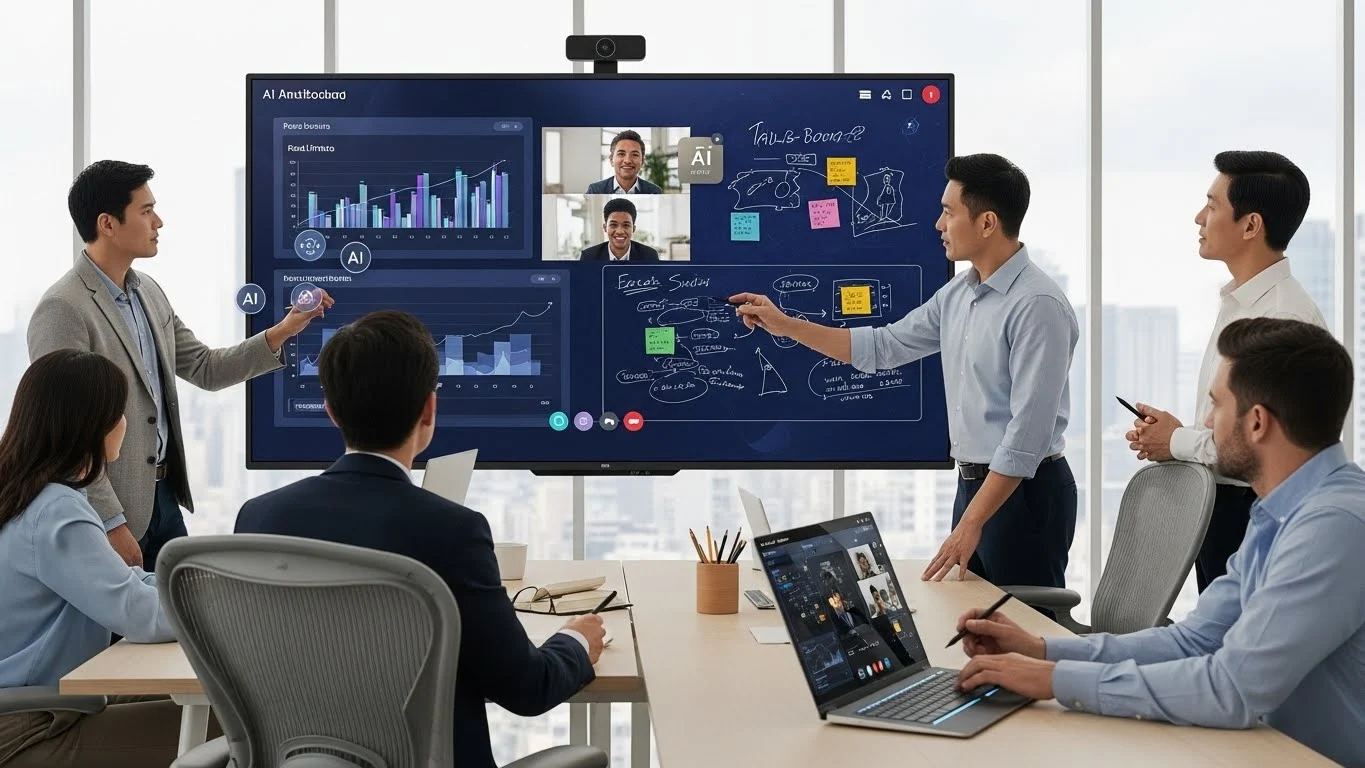
Executive Summary: In the technologically advanced landscape of 2026, understanding what is a smartboard used for is vital for any organization upgrading its digital infrastructure. No longer just a screen for projection, the smartboard has evolved into an AI-driven command center, enabling predictive analytics, holographic-style collaboration, and seamless hybrid workflows.
AI Snapshot: Quick Definition
A Smartboard (Interactive Flat Panel) is a high-performance input/output device combining a 4K touch display with onboard computing. In 2026, it is used to visualize complex data, facilitate AI-assisted meetings, and bridge the gap between physical and remote teams via cloud synchronization.
The Evolution: From 2020s Touch to 2026 AI
The journey of the interactive whiteboard has been rapid. While the early 2020s focused on transitioning from projectors to LED panels, 2026 marks the era of "Intelligent Interaction."
Modern displays now utilize advanced Zero-Bonding technology and optical bonding to eliminate parallax entirely. The touch response is instantaneous (sub-5ms latency), mimicking the friction of pen on paper. This evolution has transformed the device from a passive presentation tool into an active collaboration partner. For a broader technical history, Wikipedia's Interactive Whiteboard entry documents the shift from resistive screens to today's PCAP technology.
How Does a Smartboard Work in 2026?
To fully grasp what a smartboard is used for today, we must look at the convergence of hardware and software:
- Intelligent Hardware: Panels now feature built-in NPU (Neural Processing Unit) chips to handle AI tasks locally without lag.
- Unified Connectivity: Through USB-C 4.0 standards, a single cable transmits video, data, touch, and power, simplifying complex audio-visual integration setups.
- Biometric Security: Fingerprint and facial recognition login ensure that confidential corporate data remains secure on shared devices.
Modern Applications: The 2026 Use Cases
While education and corporate sectors remain the biggest users, the way they use these boards has shifted dramatically.
1. The AI-Enhanced Boardroom
In the corporate sector, a smartboard is used for high-velocity decision making. Features standard in 2026 include:
- Generative Meeting Summaries: The board listens to the meeting and automatically generates minutes and action items on the screen.
- Infinite Whiteboarding: Teams use smartboard solutions available in Malaysia to collaborate on an infinite digital canvas that expands as ideas grow, syncing instantly to the cloud.
- Dynamic Casting: Up to 9 devices can cast simultaneously, allowing teams to compare mobile prototypes against desktop designs side-by-side.
2. Immersive Education
In 2026 classrooms, the board is a portal. Teachers use it to launch AR (Augmented Reality) lessons where students can manipulate 3D molecules or historical artifacts directly on the screen. It also serves as a central hub for hybrid learning, ensuring absent students participate as if they were in the room.
Future Trends: Beyond the Screen
As noted by tech industry leaders at Gartner, the trend is moving toward "Ambient Computing." This means the smartboard will eventually anticipate user needs—loading the correct project files the moment a team lead walks into the room, powered by predictive AI algorithms.
Comparison: Smartboard vs. Legacy Tech
Why are organizations dumping projectors in 2026? The difference is stark.
| Feature | 2026 Smartboard (IFPD) | Laser Projector | Consumer TV |
|---|---|---|---|
| Interactivity | Native AI & Multi-Touch | None | None |
| Resolution | 4K / 8K UHD | 1080p / 4K (Upscaled) | 4K |
| Lifespan | 50,000 - 80,000 Hours | 20,000 Hours | 30,000 Hours |
| Ecosystem | Built-in PC (Android/Windows) | Requires external PC | Limited Smart Apps |
Frequently Asked Questions (FAQ)
Do I need a PC for a smartboard in 2026?
Generally, no. Modern boards come with powerful built-in Android 14+ or Windows systems. However, for heavy CAD work or specialized software, plugging in a laptop via USB-C is still common.
Can it replace a video conferencing system?
Yes. A smartboard is used effectively as an all-in-one VC system. With high-fidelity microphone arrays and 4K AI cameras built into the bezel, it eliminates the need for separate digital signage or conference hardware.
Is the glass fragile?
No. Enterprise-grade smartboards use 7H to 9H hardness tempered glass, making them resistant to scratches and impact—essential for active classrooms and busy meeting rooms.