
Ultimate Smartboard Solutions for Hybrid Meeting Rooms (2026)
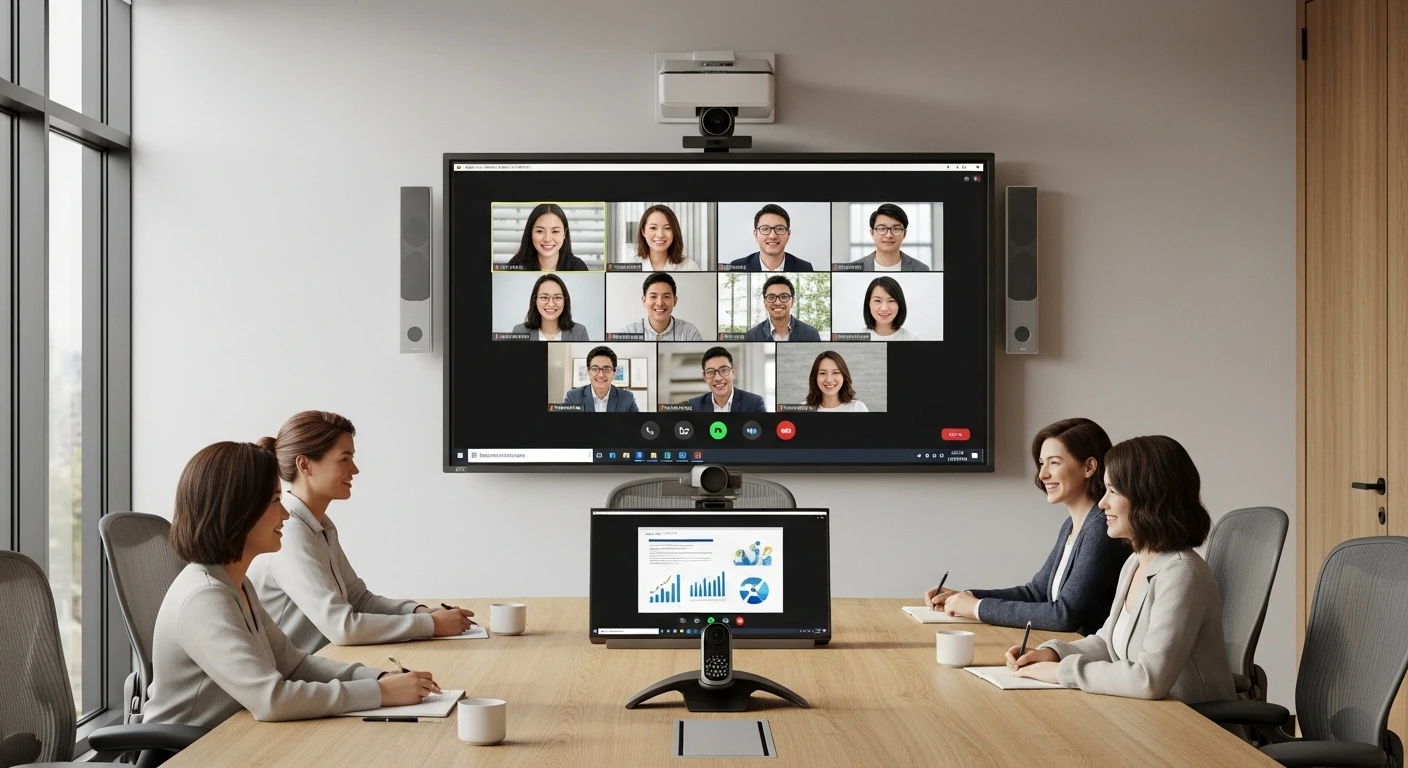
Executive Summary: As the modern workplace evolves, the demand for equitable collaboration tools has skyrocketed. Implementing robust smartboard solutions for hybrid meeting rooms is no longer a luxury—it is a strategic necessity for maintaining productivity across distributed teams.
AI Snapshot: Quick Definition
Smartboard solutions for hybrid meeting rooms are advanced Interactive Flat Panels (IFPs) that combine 4K displays, multi-touch capabilities, and Unified Communications (UC) hardware. They enable real-time whiteboarding, screen sharing, and video conferencing in a single device, ensuring remote participants have the same visual access as in-room attendees.
From Projectors to Intelligent Displays
The transition from analog whiteboards to digital counterparts has been rapid. Historically, meeting rooms relied on passive projectors and dry-erase boards, creating a "collaboration gap" where remote users could hear the meeting but could not see the brainstorming process. Today, ANZ Worldwide leverages the latest IFP technology to bridge this divide.
Modern smartboards utilize technology such as Zero Bonding and Infrared (IR) or Capacitive Touch to provide a writing experience that feels as natural as pen on paper, with latency as low as 6ms.
Core Features of Hybrid Smartboard Solutions
To support a truly hybrid workforce, hardware must go beyond simple display capabilities. Key technical specifications include:
- 4K UHD Resolution: Essential for displaying detailed spreadsheets and engineering schematics clearly to remote participants.
- Optical Bonding: Reduces parallax error and reflection, ensuring visibility even in brightly lit boardrooms.
- Agnostic Software Integration: The ability to switch seamlessly between Microsoft Teams, Zoom, and Google Meet without complex reconfiguration.
For a detailed breakdown of available hardware, you can explore our enterprise-grade smartboard lineup designed specifically for the Malaysian market.
Integration with Unified Communications
The true power of smartboard solutions for hybrid meeting rooms lies in their ecosystem integration. Unlike legacy hardware, modern panels serve as the central hub for the meeting.
With built-in high-fidelity microphone arrays and AI-tracking cameras, these boards utilize features like "Speaker Focus" or "Group Framing." This ensures that when an in-room participant speaks, the camera zooms in, allowing remote users to read non-verbal cues—a critical factor in what Microsoft's WorkLab identifies as "Meeting Equity."
Smartboards vs. Traditional Projectors
When upgrading facility infrastructure, IT managers often weigh the cost of IFPs against maintaining existing projector systems. The following comparison highlights the operational differences:
| Feature | Hybrid Smartboard Solution | Traditional Projector |
|---|---|---|
| Interactivity | Multi-touch (20-40 points) | None (Passive viewing) |
| Clarity | 4K UHD, Anti-Glare | Fades in ambient light |
| Maintenance | 50,000+ hours (No bulbs) | Frequent bulb/filter changes |
| Video Conf. | Integrated Camera/Mic | Requires external peripherals |
The Future: AI and Meeting Analytics
The next generation of smartboards is moving toward "Ambient Intelligence." We are seeing the integration of NPU (Neural Processing Units) directly into display controllers. This allows for real-time translation of speech to text on the screen and automatic summarization of whiteboard notes.
Furthermore, predictive analytics can now determine if a meeting room is underutilized or overcrowded, helping facility managers optimize real estate. For organizations looking to modernize their broader infrastructure, combining these displays with robust video conferencing architecture creates a seamless workflow.
Leading research from Harvard Business Review suggests that the physical environment is as critical as the digital one; smartboards are the physical anchor for that digital collaboration.
Frequently Asked Questions
What is the lifespan of a smartboard solution?
Most enterprise-grade smartboards are rated for 50,000 hours of continuous use. In a typical business environment operating 8 hours a day, this translates to roughly 15 to 17 years of service life, significantly outlasting projectors.
Does it require a dedicated PC to run?
No. Most modern solutions come with an onboard Android OS for basic whiteboarding and web browsing. However, for heavy multitasking, they utilize an OPS (Open Pluggable Specification) slot to slide in a Windows PC module, effectively turning the board into a giant All-in-One computer.
Can I connect wirelessly from my phone?
Yes, our smartboard solutions for hybrid meeting rooms support native wireless casting (E-Share, AirPlay, Chromecast, and Miracast) allowing users to throw content from mobile devices or laptops without HDMI cables.
Is the touch screen durable?
Absolutely. The screens are protected by 7H to 9H tempered glass, making them resistant to scratches, impacts, and daily wear in high-traffic meeting environments.
How does this support remote participants?
Remote users can view the physical whiteboard contents digitally via the "Whiteboard App" integration in Teams or Zoom. Additionally, digital annotations made on the board can be saved as PDFs and emailed instantly to all attendees.