
Whether you’re driving through the neon-drenched streets of Bukit Bintang or navigating a high-end mall in Petaling Jaya, the impact is undeniable. LED Screen Malaysia technology has evolved from simple scoreboards into an immersive architectural element. In 2026, it’s no longer just about showing an ad; it’s about creating a digital landmark.
If you are looking to invest in an LED screen Kuala Lumpur setup, you are entering a market defined by rapid innovation. This guide cuts through the technical jargon to help you make a data-driven investment.
What is an LED Screen?
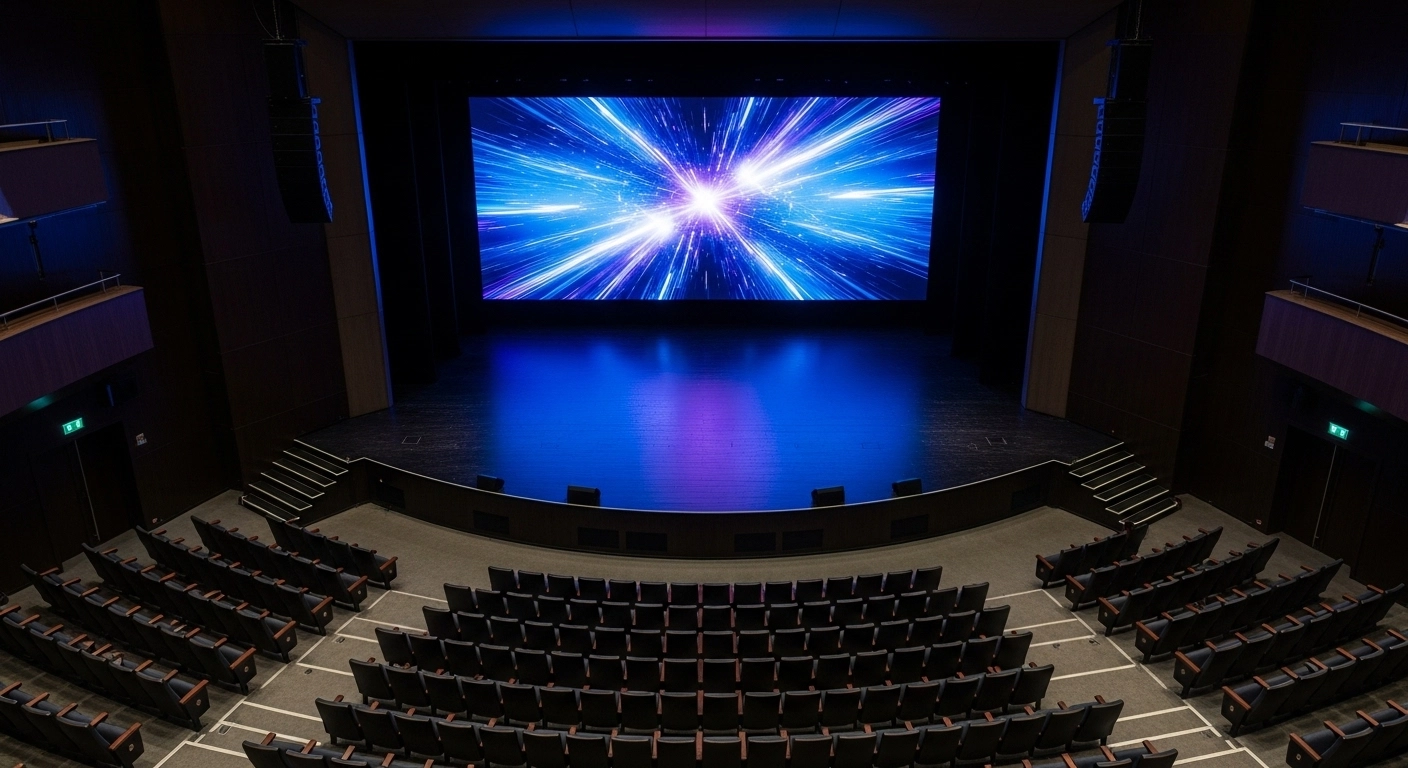
At its core, an LED (Light Emitting Diode) screen is a self-emissive display where each pixel consists of a cluster of microscopic LEDs. Unlike standard LCDs that rely on a backlight, these pixels generate their own light. This results in the “true blacks” and high-contrast ratios required for high-impact visual storytelling.
How LED Display Technology Works
The industry has largely moved toward Surface Mounted Device (SMD) tech, but the real “insider” shift in 2026 is COB (Chip on Board). By mounting the LED chips directly onto the substrate and sealing them with resin, manufacturers have solved the “fragility” problem. COB screens are more robust, offer better heat dissipation, and provide a wider viewing angle of nearly 180°.
Key Advantages of LED Screens
Daylight Visibility: With brightness levels far exceeding traditional monitors, they remain vivid even under the harsh Malaysian afternoon sun.
Modular Scalability: There is no “maximum size.” Because they are bezel-less, you can build a screen as large as a skyscraper facade without visible seams.
Energy Intelligence: Modern energy-efficient LED technology now uses common-cathode driving, which reduces heat and power consumption by up to 30%.
Industrial Durability: A lifespan of 100,000 hours means your investment can technically run for over a decade.
Types of LED Screen in Malaysia
Indoor LED Screen (Fine Pixel Pitch)
In the high-stakes environments of corporate boardrooms and luxury retail, Fine Pixel Pitch (P0.9 to P1.8) is the standard. The closer the audience, the tighter the pitch needs to be to prevent “pixelation,” ensuring that text remains crisp and skin tones look natural.
Outdoor LED Screen (High Brightness & Weatherproof)
Malaysia’s tropical climate is a “torture test” for electronics. High-quality outdoor screens feature IP65-rated enclosures and specialized anti-UV masks to prevent the screen from “yellowing” over years of exposure to intense sunlight.
Transparent LED Screen
These are the darlings of retail window displays. By maintaining transparency, they allow natural light into the building while turning the glass into a digital canvas. It’s a sophisticated way to bypass city ordinances that might restrict solid-wall billboards.
Flexible & Creative LED Display
We are seeing a surge in “Anamorphic 3D” content in Kuala Lumpur—displays that look like objects are jumping out of the screen. This often requires curved or flexible modules that wrap around building corners to create the illusion of depth.
LED Screen Specifications Explained
Pixel Pitch & Viewing Distance
The “P” value represents the distance in millimeters between pixels. A common mistake is buying a pitch that is too fine for the distance.
Calculation: The optimal viewing distance is roughly $Pixel Pitch \times 1000$. For a P2.5 screen, the “sweet spot” starts at 2.5 meters.
Brightness (Nits) for Indoor vs Outdoor
Indoor: Usually capped at 1,000 nits to prevent eye strain.
Outdoor: Must exceed 5,500 nits. Insight: Look for screens with automatic light sensors that dim the display at night to comply with local council (DBKL/MBPJ) light pollution regulations.
Refresh Rate & Image Quality
For professional broadcasting or social-media-heavy venues, a 3,840Hz refresh rate is mandatory. Anything lower results in “black scan lines” when captured via smartphone cameras, effectively killing your brand’s “Instagrammability.”
Resolution & Screen Size
While 16:9 aspect ratios are standard, LED walls are unique because you can customize the resolution. You can create ultra-wide “ribbon” displays for stock tickers or vertical “totems” for wayfinding.
LED Screen Applications in Malaysia
Advertising & Digital Billboards
Digital Out-of-Home (DOOH) in Malaysia has shifted toward programmatic buying. This means ads can change based on the time of day, weather, or even the traffic density on the Federal Highway.
Retail & Commercial Displays
Modern malls are no longer just shopping centers; they are “experience hubs.” Large-scale indoor LEDs are used to create “forced perspective” 3D visuals that draw massive crowds for product launches.
Events & Stage LED Screens
Rental-grade screens for concerts and weddings are built for speed. They use “fast-lock” mechanisms that allow a 20-meter wall to be erected and calibrated in just a few hours.
LED Screen Price Malaysia
Price by Pixel Pitch
The cost doesn’t just increase linearly; it’s exponential. A P1.2 screen requires significantly more LEDs per square inch than a P2.5, driving up both material costs and manufacturing complexity.
Cost Breakdown (Panel, Controller, Installation)
Hardware (Modules & Cabinets): 65% of the total cost.
Control System: This includes the sending box and receiving cards—the “nervous system” of the display.
Video Processor: The most overlooked component. A high-end processor ensures that low-res video looks sharp on a high-res LED wall.
Rental vs Purchase LED Screen
Insight: If you use a screen more than four times a year, purchasing usually offers a better ROI. However, rental is preferred for “one-off” spectacles where you want the latest technology without the long-term maintenance headache.
How to Choose the Right LED Screen
Based on Viewing Distance
Identify your “primary viewing zone.” If 80% of your audience is 10 meters away, a P10 or P8 is perfectly adequate and will save you thousands compared to a P4.
Indoor vs Outdoor Selection
Never compromise. Using an indoor screen in a semi-outdoor area (like a covered patio) often leads to failure due to “latent humidity,” which corrodes internal copper traces.
Budget Consideration
Consider the “Total Cost of Ownership.” Cheap panels often use iron cabinets that rust in Malaysia’s humidity. Spending 15% more on aluminum cabinets can add years to the screen’s life.
LED Screen Installation
Site Preparation & Structure
For large-scale billboards, a professional engineer (PE) must certify the structural integrity of the steel frame. Wind load is a major factor in Malaysia, especially for rooftop installations.
Mounting Methods
Front Maintenance: The modules pop out from the front using a vacuum tool. Essential for screens mounted flush against a wall.
Rear Maintenance: Requires a walkway behind the screen. Common for giant outdoor billboards.
System Setup & Testing
Calibration is key. A “White Balance” test ensures that the screen doesn’t have a blue or yellow tint, which is vital for maintaining brand color accuracy (e.g., getting that specific “Maxis Green” or “AirAsia Red” right).
LED Screen Maintenance
Common Issues & Troubleshooting
Caterpillar Effect: A line of bright LEDs caused by a faulty driver IC.
Ghosting: Faint images appearing where they shouldn’t, often solved by adjusting the “blanking” settings in the software.
Lifespan & Maintenance Tips
Ventilation: Heat is the #1 killer of LEDs. Ensure the proper operating temperature is maintained.
Consistent Use: Paradoxically, LEDs last longer if they are used regularly. Turning a screen off for months allows moisture to seep into the diodes.
LED Screen Supplier Malaysia
What to Look for in a Supplier
Look for a partner, not just a vendor. A top-tier LED screen Malaysia supplier should provide a local “spare parts kit” (5% extra modules, power supplies, and cables) on-site for immediate repairs.
Warranty & Support
In a market like Kuala Lumpur, “Next Business Day” support is the gold standard. Verify that the supplier has their own in-house technicians rather than outsourcing to third-party freelancers.
FAQ About LED Screen Malaysia
How Much Does an LED Screen Cost?
A standard indoor P3 setup might range from RM6,000 to RM9,000 per sqm, while specialized transparent or ultra-fine pitch screens can exceed RM25,000 per sqm.
What Pixel Pitch Should I Choose?
Use the “1-to-1” rule: for every 1mm of pitch, you need 1 meter of viewing distance for the best experience.
Can LED Screen Be Used Outdoor?
Only those with an IP65 rating. Always check the brightness; it must be over 5,000 nits to be visible during a clear Malaysian day.
How Long Does LED Screen Last?
While rated for 100,000 hours, most screens are replaced after 7 to 8 years as newer, more energy-efficient models become available.